Start by defining the food type, portion size, temperature and whether the meal will be reheated in the package.
| Consideration | Questions to ask |
|---|---|
| Capacity | What is the filled volume and headspace? |
| Compartments | Should sauces or sides be separated? |
| Material | Will the container be microwaved or chilled? |
| Presentation | Do you need a clear or colored container? |
Material: PP for microwave, CPET for oven
For most takeout and delivery programs, PP (polypropylene) is the best all-round choice: it is microwave safe, freezer friendly (-20 C to +120 C), lightweight and recyclable. If your meals are oven-ready, CPET can handle temperatures up to 200 C but costs more and is usually chosen for prepared meal brands rather than general delivery.
Lid and leak-proof performance
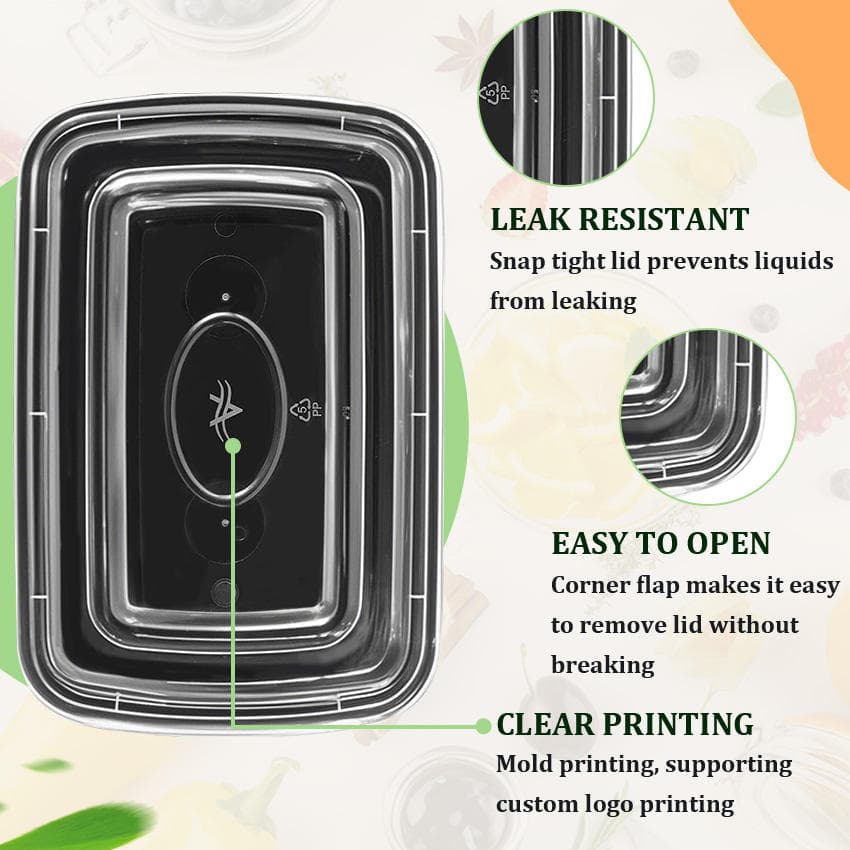
Leakage is one of the most common complaints in food delivery. Look for containers with a snap-lock or clamshell-style lid that closes tightly, and test with sauces and liquids during sampling. A tight-fitting lid also keeps food fresher and reduces the need for extra wrapping.
Cost and MOQ
Buying in bulk lowers per-unit cost and keeps packaging consistent. When working with an overseas supplier, ask about MOQ, lead time, and whether custom branding (embossed logo, printed sleeve) is available. A supplier with a large existing mold library can often start with standard sizes and avoid new tooling costs.
A physical sample is the most reliable way to evaluate filling, sealing and delivery performance before a larger order. Request samples from 2-3 suppliers and run them through your real filling, sealing and delivery test.
← Back to all news